
A Crisis Is a Terrible Thing to Waste
Or: Why Snowstorms, Disasters, and Other Disruptions Keep Accidentally Making Us Better at Being Human

“Times of crisis and chaos present us with the opportunity to do the best work of our lives. People use words that they pull from the depths of their spirits. People paint with strokes that they summon from their souls. People sing notes that come from the cosmos. People innovate. We must keep doing that.”― Luvvie Ajayi Jones, Professional Troublemaker: The Fear-Fighter Manual
During this last snowstorm, which still lingers in grimy, half-melted piles across Philadelphia, I felt unusually connected to strangers.
Not because Philadelphians had undergone some sudden moral transformation. I’m still not entirely convinced we deserve the title “City of Brotherly Love.”
But because the snow turned parallel lives into intersecting ones.
The connection showed up in small, human acts. Neighbors helping push a stuck car in the Waverly Street alley behind our house. People shoveling sidewalks that weren’t theirs. Hands reaching out when I tried to scale the mounted ice wall at the curb on my way to a meeting. People making eye contact. Checking in. Laughing at the inconvenience.
There was an unspoken understanding: Well, this is happening. Guess it’s all of us.
The snow gave us a mutual challenge, a reason to notice one another. And once we noticed one another, we acted differently ~ more generous, more patient (except for drivers; stop honking), collectively more human.
For a moment, there was a “we.”
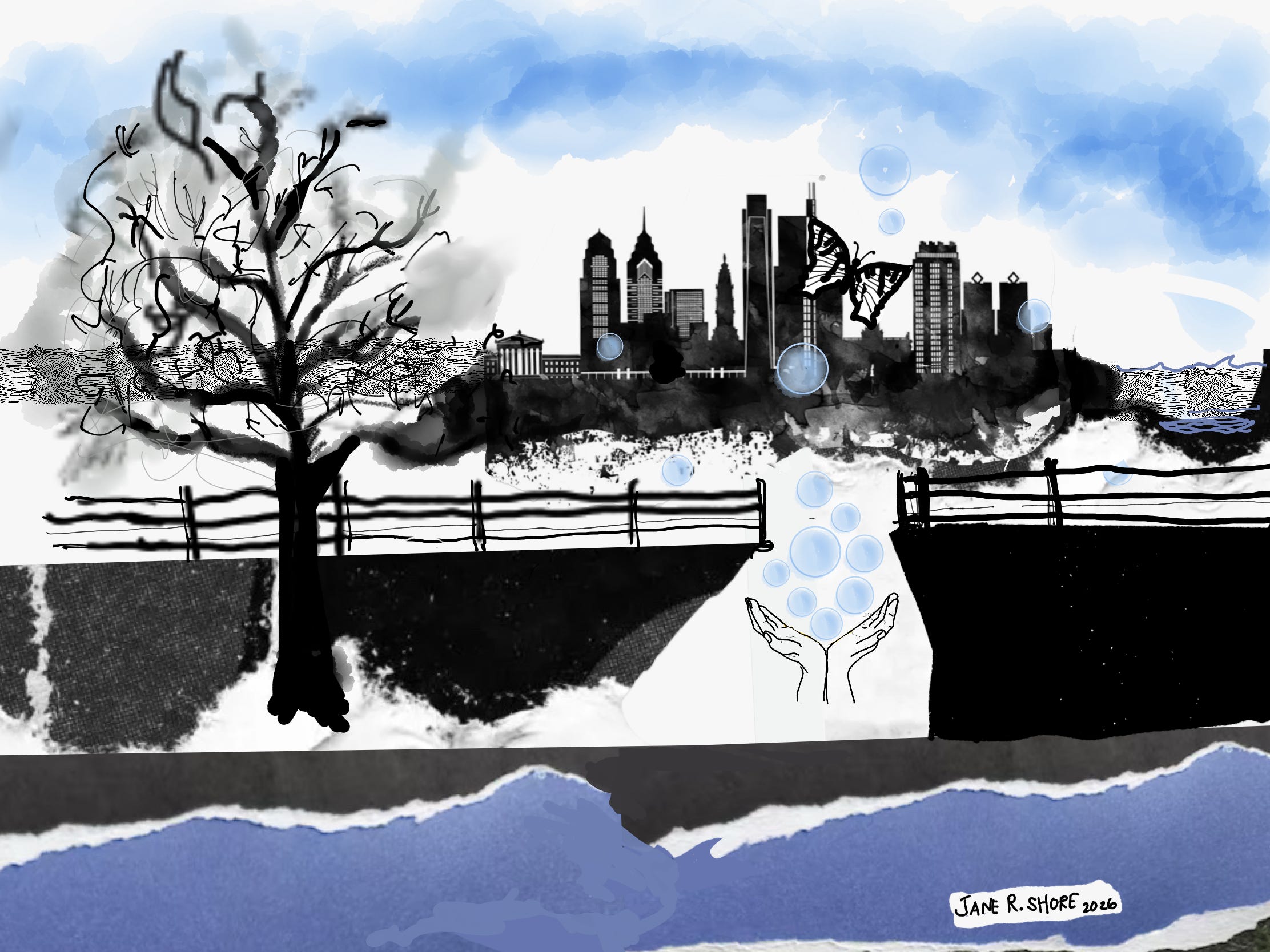
This reminded me of something Adam Mastroianni wrote about in a post recently. He describes the science behind bubbles in carbonated drinks as an analogy. Bubbles don’t appear spontaneously. They need tiny imperfections ~ scratches, pits, microscopic places where molecules can gather long enough to reach critical mass. In a perfectly smooth glass, nothing happens.
Human connection works the same way. As Adam puts it:
“People are constantly crashing against each other in the great sea of humanity, but only under special conditions do they form the molecular bonds of friendship.”
Most of the time, life is a smooth glass. We bump into each other, but don’t stick.
However, under certain conditions ~disruption, intensity, shared attention~something changes. We notice one another. Small acts accumulate.
In other words, human connection requires a flaw in the glass. Crises create those imperfections. They interrupt routine, demand coordination, and make our interdependence impossible to ignore. And in doing so, they become sites where learning quietly “nucleates” (Adam’s word) not because anyone is teaching, but because people are suddenly oriented toward one another.
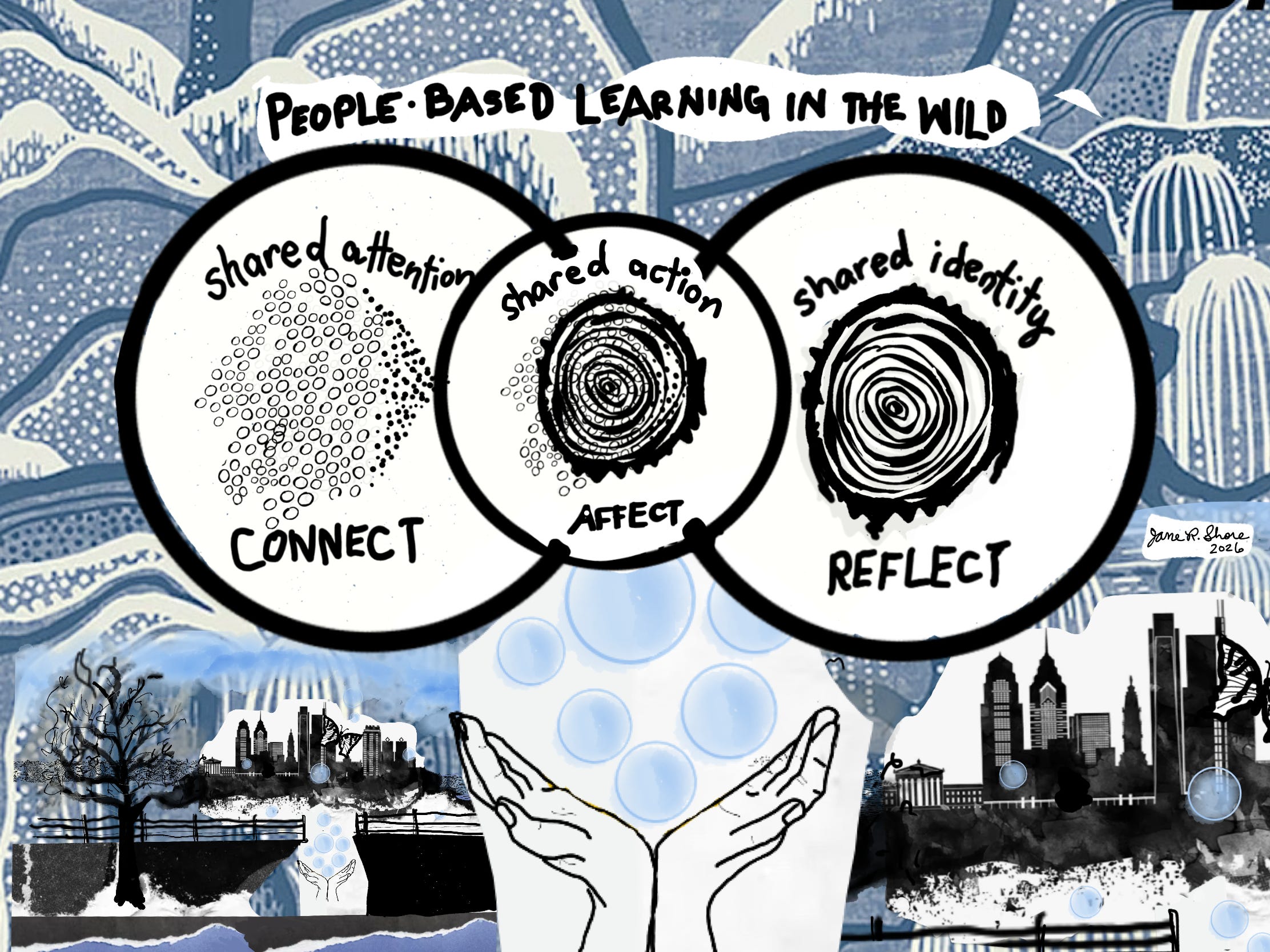
The snowstorm did this briefly. Other crises do it more painfully. But the mechanism is the same: shared attention creates shared identity, and shared identity changes how we act.
I think of this as People-Based Learning in the wild. Learning that emerges not from instruction, but from shared experience, mutual attention, and coordinated action. No one was teaching us anything. And yet, we were learning how to move together, to help or to trust.
Right now, there is a much larger crisis unfolding in the United States.
Not a storm you can shovel away, but something more ambient and unsettling: the erosion of democratic norms, the rise of authoritarian impulses, a low-grade sense of fear and fragmentation that’s hard to name, but impossible to escape.
It’s in the air locally, nationally, globally.
And the question isn’t only whether this crisis will divide us. It’s whether it might also reveal, as other crises have, our latent capacity to learn with and from one another.1
The Big Idea(s)
Our cultural story about crisis is surprisingly wrong. We expect panic. What shows up, again and again, is connection.
