
When the Grade Doesn’t Match the Learning
On assessment, lost scratch paper, and the cost of a system that can’t see what it claims to measure

Click the ❤️ and leave a comment if you can relate! Find more ways to act on the story shared here in Chapter 8 of People-Based Learning: The Future of Learning is Human (Routledge, 2026)
My son is currently fighting a grade he didn’t earn.
Without going into too much detail, apparently his professor can’t locate his scratch paper, the intermediate work that was supposed to accompany his final submission. He turned it in, but it got lost somewhere in the process. And because the system has no mechanism for trusting what it can’t document, the grade stands until he proves otherwise.1
What makes this particularly hard is what the rest of his record shows. His last three test grades in the course form a clear arc, each one stronger than the last, demonstrating not just knowledge but growth. He worked his way up in this class. The evidence of that is visible to anyone who looks at the full picture.
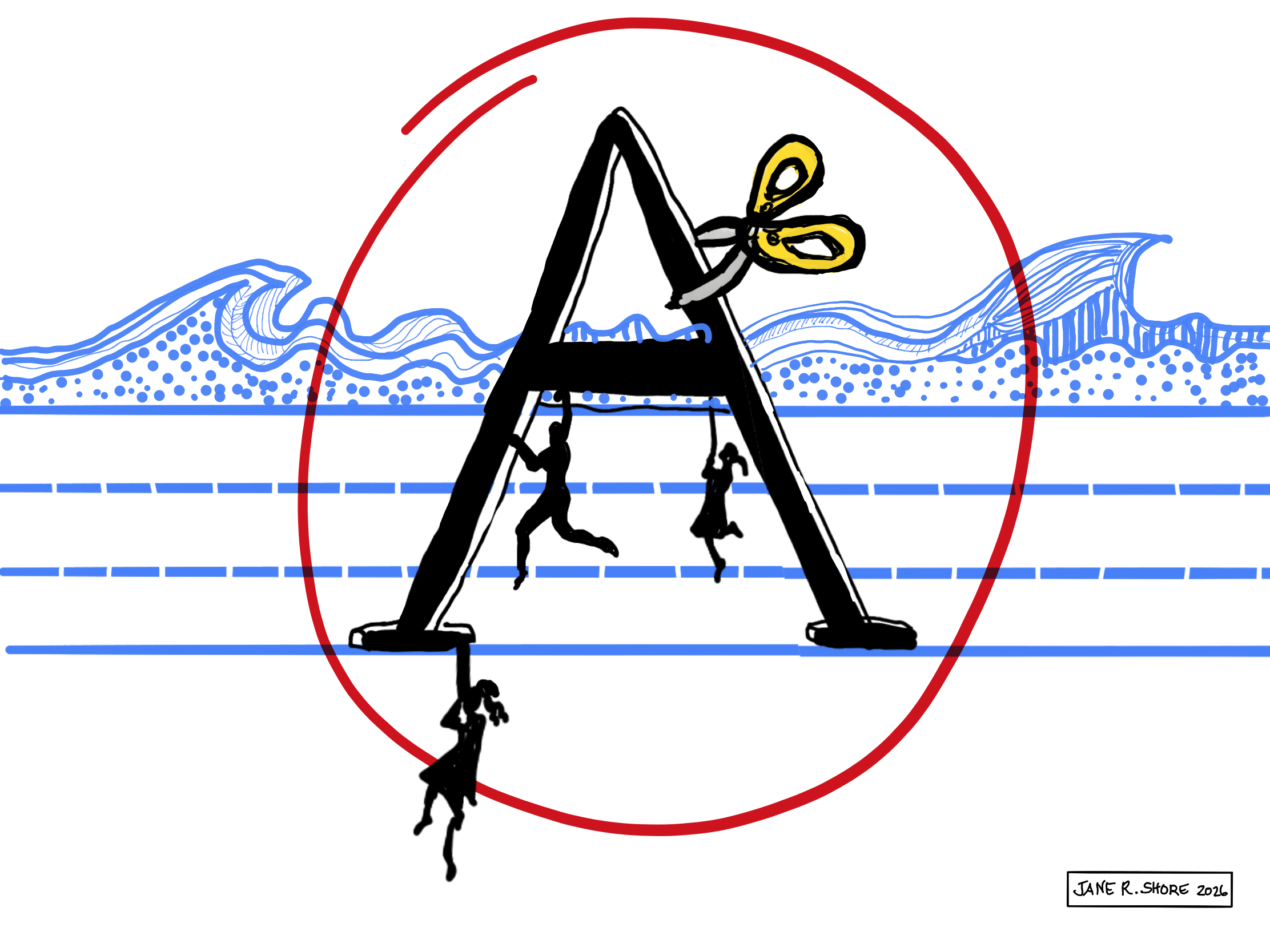
The system isn’t looking at the full picture, it’s looking for a piece of paper.
That grade made him ineligible for a summer program he’d been planning toward, which is happening now. Even if the grade is eventually corrected, and his Dean is supporting him, so there’s reason to hope, he won’t be in it. That window is closed.
There is no villain in this story. The professor isn’t malicious (maybe) and the institution isn’t indifferent. Everyone seems to agree something went wrong. But the system doesn’t have a mechanism for absorbing its own errors without cost. And when it can’t, the cost goes to the student.
He shouldn’t need a Dean to fix this. And even with one, he’s already lost something he can’t get back.
If the purpose of a grade is to reflect what a student knows and can do, then everyone in this situation already knows what the grade should be. The scratch paper isn’t the knowledge, it’s the evidence trail the system requires to feel confident in its own judgment. When that trail breaks, the system doesn’t default to the most accurate assessment of learning, it defaults to the one that’s easiest to defend.
That’s a design problem.
And one of the most elite institutions in the world just made it worse.
&
