

The Most Undertaught Skill
Part 2 of a love note to undertaught skills, on growing unfinished thoughts

“Think! Think! Think!” - Winnie the Pooh
This past week, I spent several days at the Washington International School Institute for Teachers (WISIT) in rooms with science teachers, language teachers, school leaders, researchers, technologists, artists, museum educators. Again and again, someone would place something in front of us and ask a simple question: What do you see?
There was room to look and time to pause. No single correct answer was waiting to be uncovered. And still, sometimes, I got stuck. I wanted to have something to say. I knew it could be messy and unfinished. But what did I see?
Then I started listening and drawing. I picked up my little iPad pen. I heard a phrase, drew it, changed it, and started collaging emerging ideas into a visual. My hands, in the presence of others, gave my thinking somewhere to go.
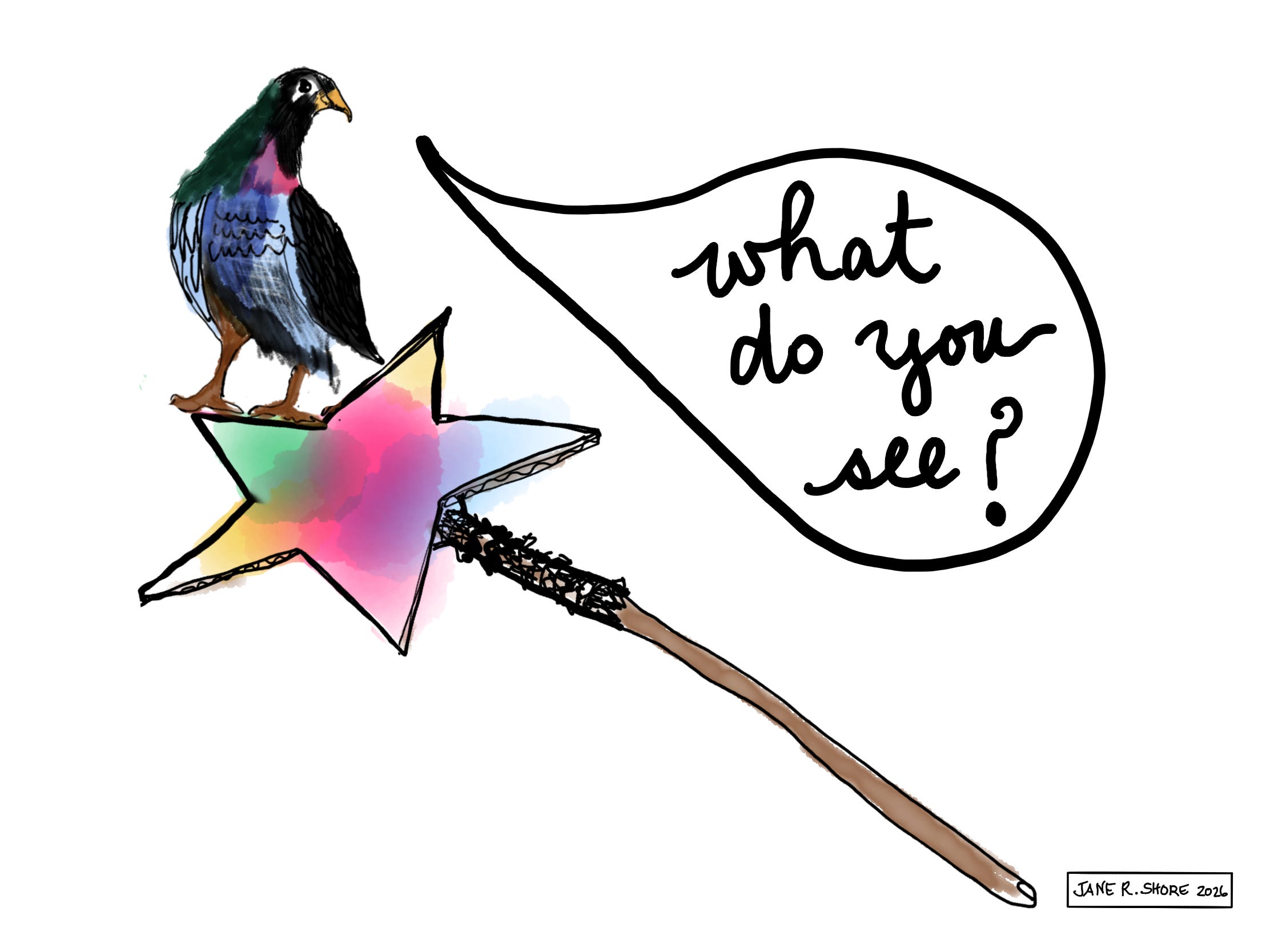
The visual did not represent a thought I had already finished. Visualizing helped the thought become thinkable.1
This experience made me wonder whether we sometimes underestimate the conditions we need to really think.
Last year, I wrote about undertaught skills that form the foundation of our lives.

Ideas included weaving perspectives together, disagreeing well, sitting with incomplete challenges. This week, WISIT, I began questioning whether there is an even larger undertaught capacity underneath all of them.
Thinking.
Thinking2 is one of those things we constantly request and often expect learners to somehow reveal. We teach what to know, sometimes reflect on how it was learned, and then wait, as though the actual moves of thinking need no instruction.
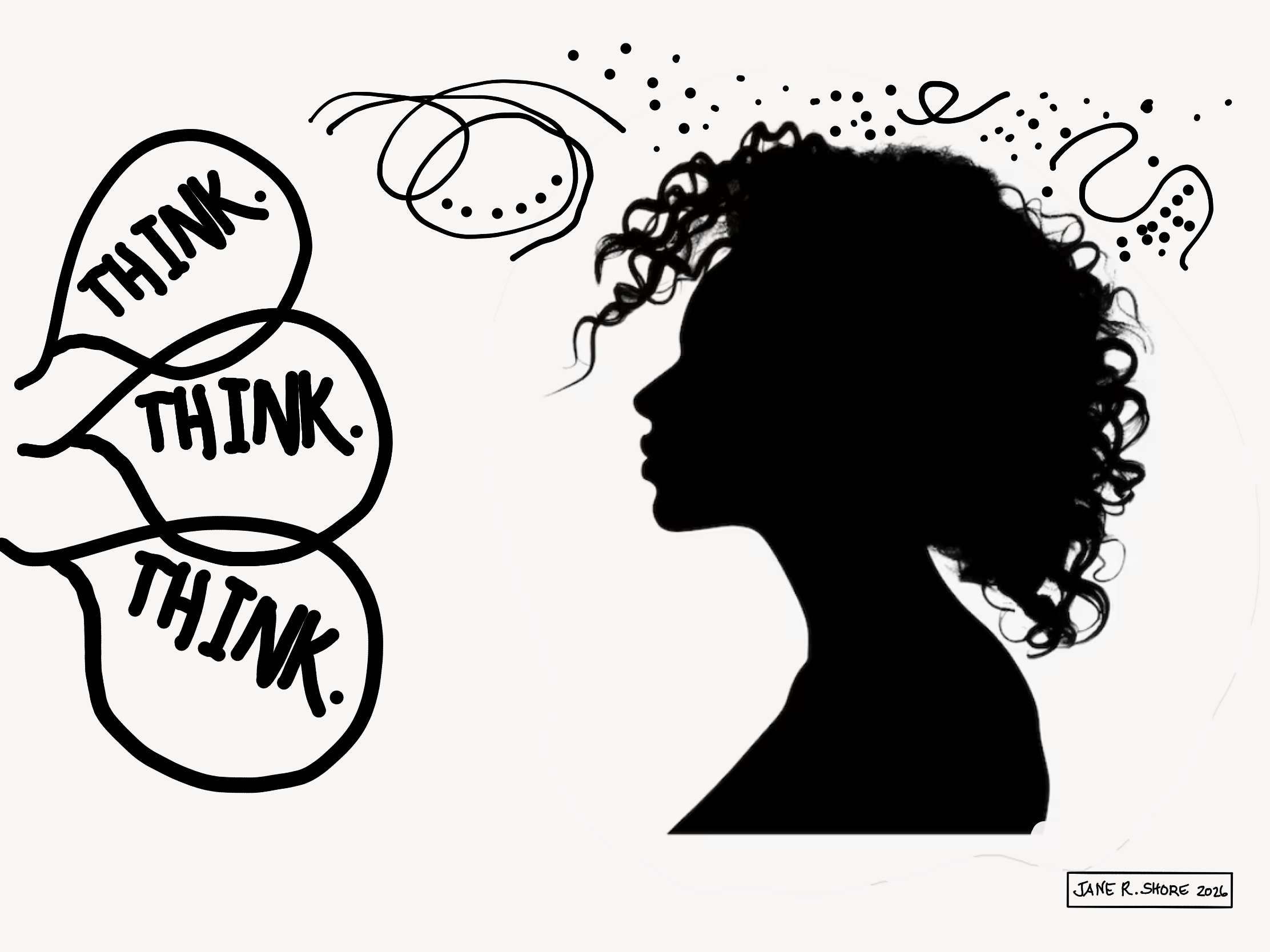
We rarely offer explicit guidance toward the small moves through which an unfinished thought develops. Thinking itself can be scaffolded.
And yes, we have a rich vocabulary for particular kinds of thinking: critical thinking, computational thinking, systems thinking, design thinking, metacognition. These are in the glossary of school. But this week revealed that we might be neglecting something more elemental. Just …thinking.
How does a thought actually develop?3
We spend a lot of time teaching students how to judge ideas: Is this claim supported? Is the reasoning sound? What is the evidence?
All of this is essential, but those questions assume the idea already exists.
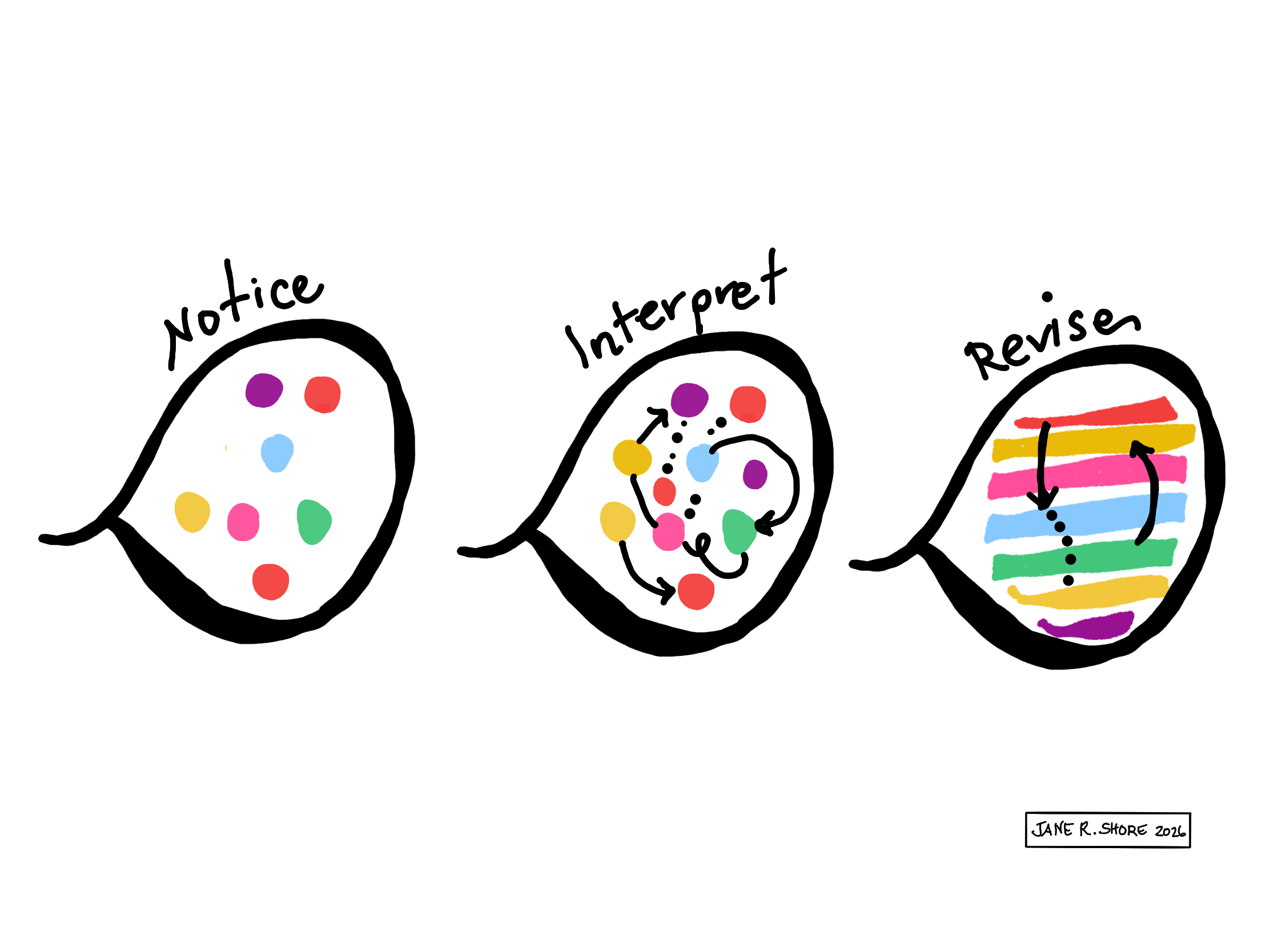
Thinking has an earlier stage. Before we can evaluate a thought, it has to take shape. We notice, connect, try an interpretation, encounter something that complicates it, and revise.
We are pretty good at teaching people how to inspect finished thoughts. We spend less time helping them grow unfinished ones.
The Big Idea
Harvard’s Project Zero’s thinking routines, a focus this week, invite people to slow down, notice, interpret, connect, and revise. They give unfinished thoughts somewhere to go.
Think about it is not an instruction. Imagine telling someone to cook about it without offering ingredients, tools, techniques, or even a place to begin.
What I realize is that this is what we do to learners all the time. ⬇️
Directions: Read this passage Think about it. Make connections to your life.
And then we evaluate the result. We assess thinking while routinely underdesigning the conditions that support it. When a learner does not produce depth, originality, or insight, we can start describing the learner as someone who simply is not a “deep thinker.”4
Maybe what we are sometimes measuring is not simply a learner’s capacity to think. Maybe we are measuring how much practice they have already had with the hidden moves that help a thought take shape. We ask to see the finished thought without always teaching what helps one become.
Structures used this week were designed to make thinking visible:
What do you notice?
What makes you say that?
What might be another explanation?
Where do you see a connection?
What has shifted in your thinking?
These questions do not tell us what to think, they give thinking somewhere to go.
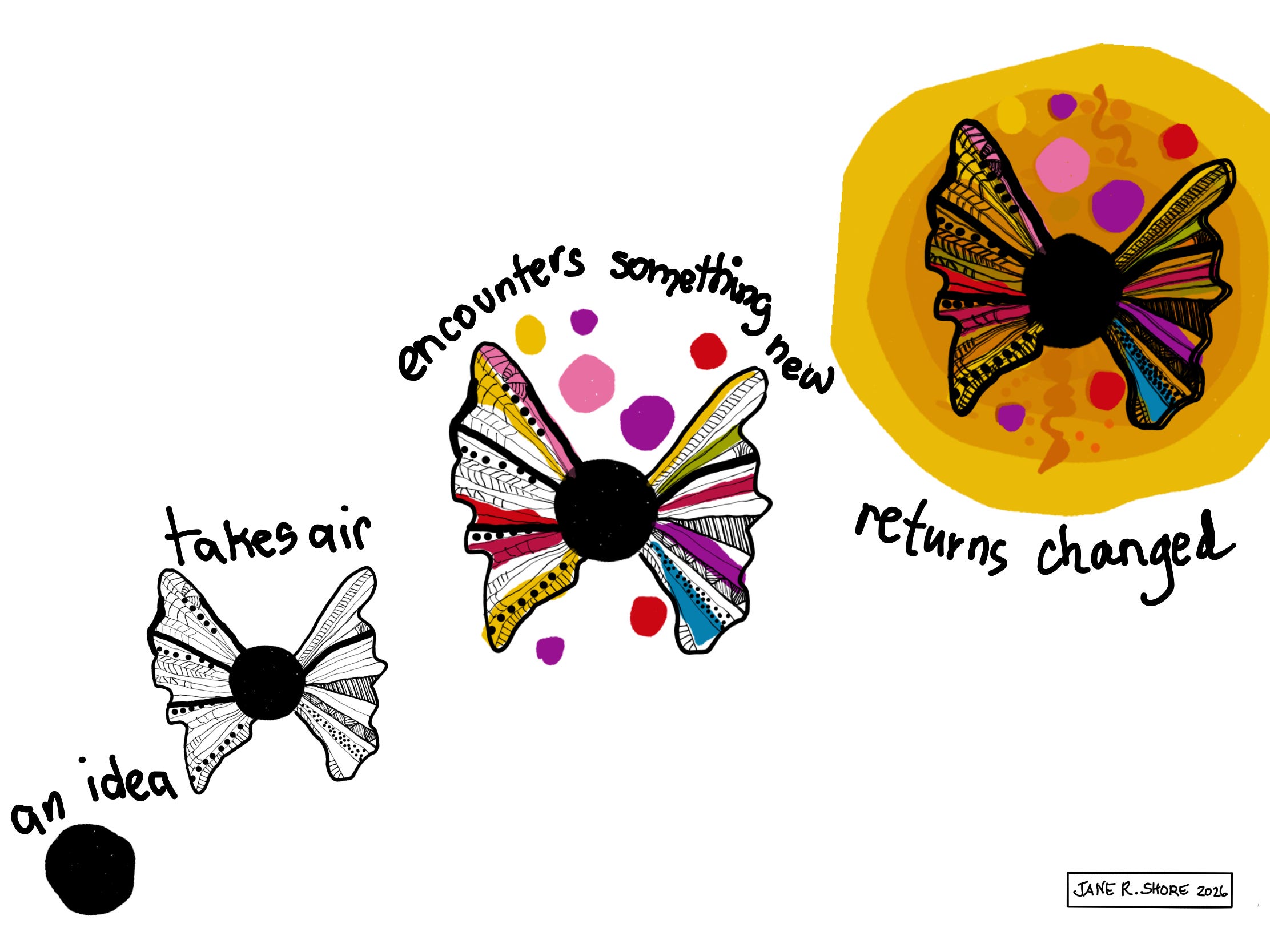
At first, I thought that was the big idea I was taking away from the week: We need to teach thinking moves more explicitly.
I still think that, but a week learning with and through others complicated the idea for me.
My most important thinking this week was not happening entirely inside my head. I visualized something, and the drawing changed what I could think. (This keeps happening!) Someone next to me asked a question I would not have asked myself. Another person offered an interpretation that rearranged mine. At the National Gallery, I noticed something only because someone else had directed my attention somewhere unexpected.
And suddenly this started bumping into People-Based Learning. (PeBL)


I have spent the past few years thinking about what changes when we stop treating people as peripheral to learning and recognize them as part of how learning happens.

Maybe I had been thinking too individually about thinking, too.
Where does a new thought actually emerge?
The obvious answer is: in our heads, but I am no longer sure that is the whole answer. A thought may belong to one person, but it can develop through language, materials, questions, experiences, environments, and other minds.
We can, of course, think alone, and we should. Not every thought needs an audience. A group is not always wiser than an individual. Sometimes another person clarifies our thinking, and sometimes another person just makes it harder to hear ourselves.
But solitude and isolation are not the same thing. Even when I am sitting alone, my thinking carries traces of other people: questions someone once asked me, language I borrowed, books I read, images I saw, arguments I disagreed with, interpretations I am still turning over.

And sometimes a thought needs company before it can go somewhere new. Another person notices what I missed. Their interpretation complicates mine. A question gives shape to something I could feel but could not yet name. An idea becomes more interesting because it has been interrupted.
A thought can be mine without being made by me alone.
That, for me, is where Thinking and People-Based Learning start to meet.
Making Big Ideas Usable
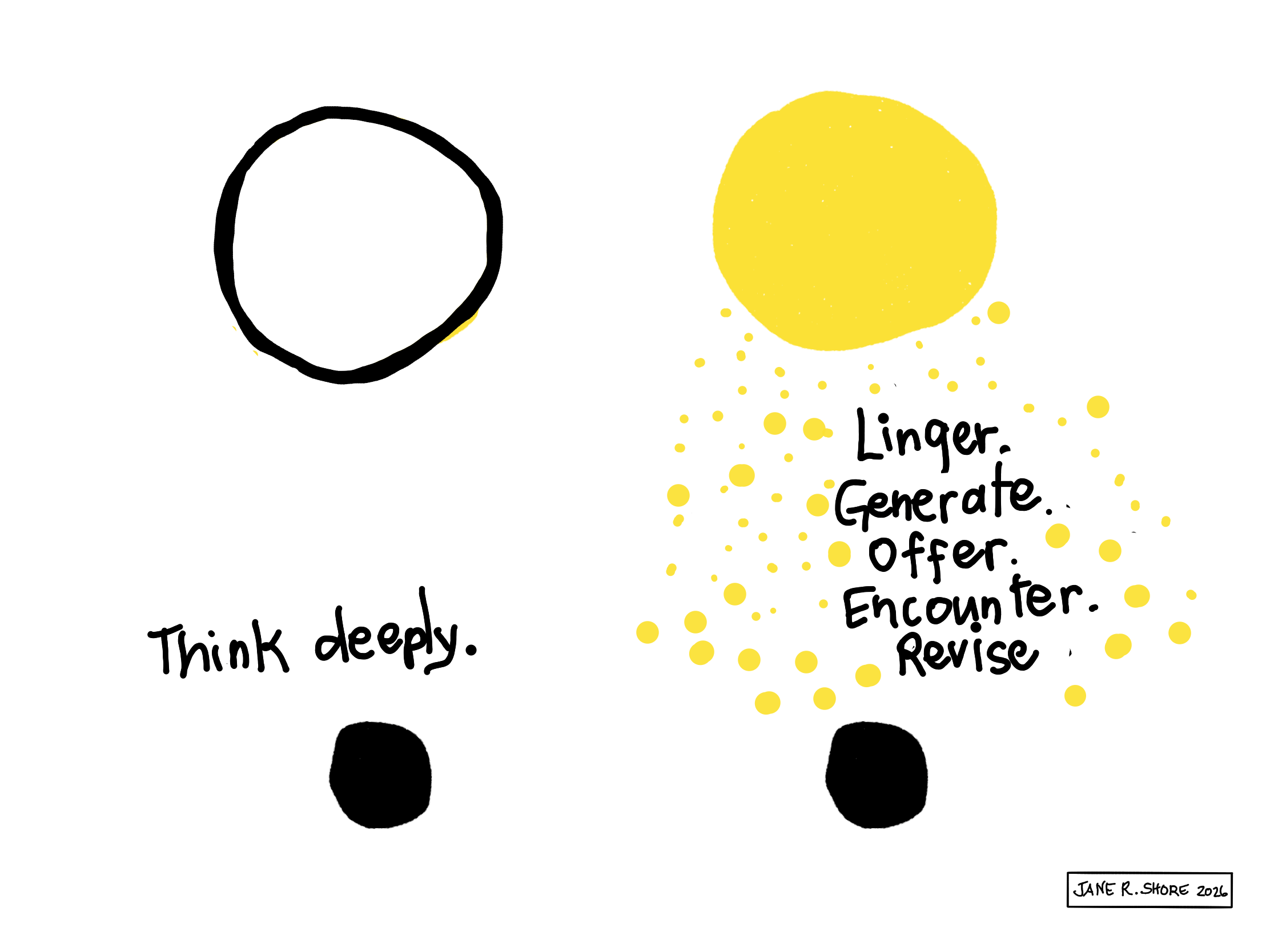
So what might it look like to practice thinking as something that can happen with and through other people, not only inside an individual mind?
I keep coming back to five moves that combine these routines and PeBL.
