
Clocked Out
A gentle case for feeling time instead of tracking it

We’re just getting started over at The Art of Being Human. Subscribe to receive prompts and engage with art, music, writing and the contributions of others.
When my youngest was about two or three, one of his favorite questions was, “Is it morning or night?”

He didn’t need to be anywhere, he was orienting himself maybe to light, to darkness, to what kind of day it might be. His life wasn’t anchored in clock time, it was anchored in being.
Morning meant brightness, movement, the feeling that something might begin.
Night meant quiet, closeness, stories (still there!), sleep coming on. Time wasn’t something he checked, it was something he noticed.
And then, slowly, we all learn otherwise. We learn to be on time, to get places in time, to do things by a certain time. Time becomes less about noticing and more about obeying. Less about orientation, more about coordination.
But for most of human history, time was not something you looked up, it was something you lived inside. People watched the sun move across the sky.
They paid attention to shadows lengthening, tides shifting, frogs calling, hunger rising, the moon returning.
Later came tools to support that noticing. Sundials that followed the sun.
Water clocks and hourglasses that marked duration. Mechanical clocks mounted on walls and town squares, helpful at first, communal, shared.
Somewhere along the way, the tool became the authority. And many of us forgot how to ask the simplest, most human question: Is it morning or night?
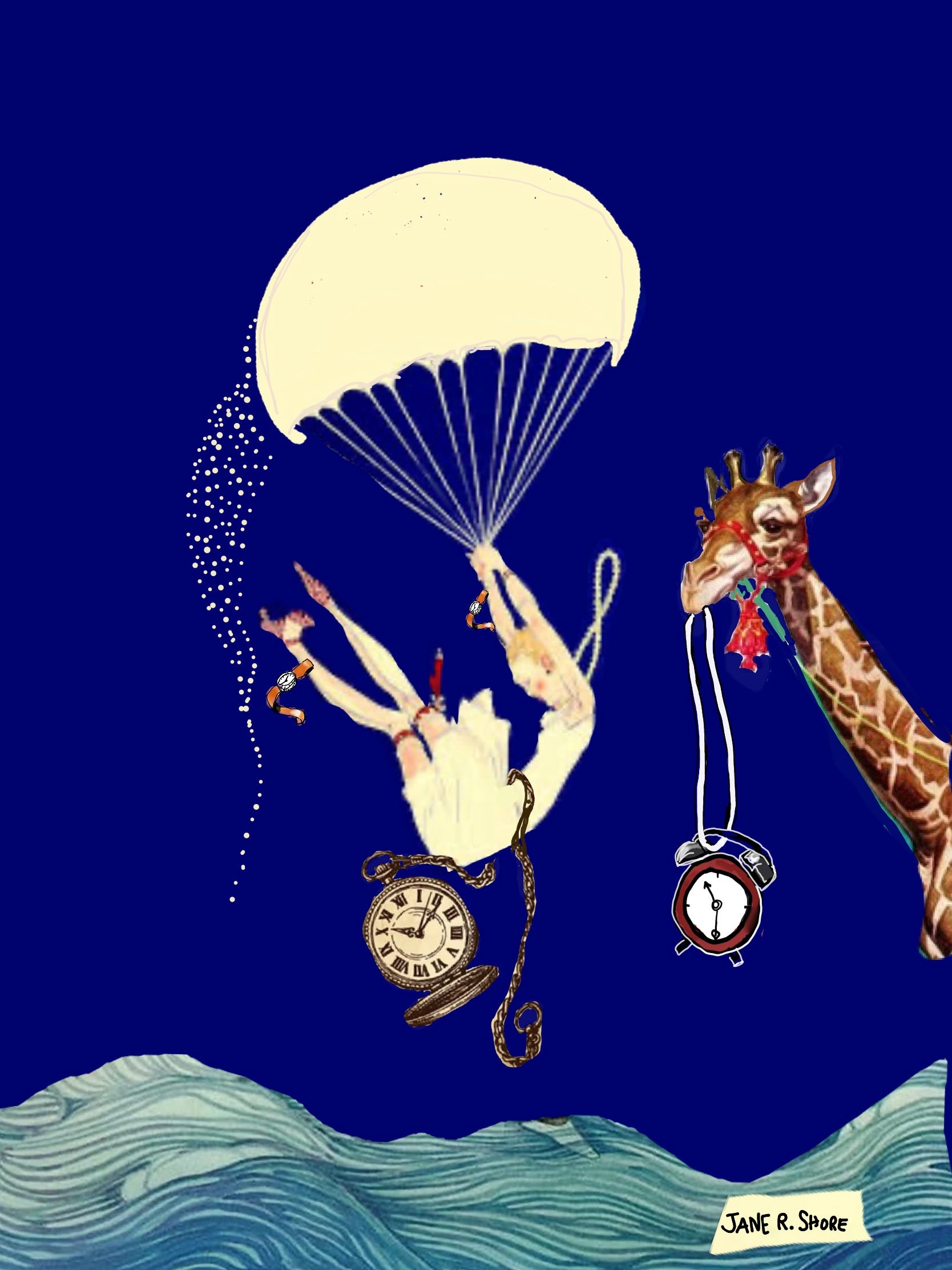
Our constant reminders of time have moved closer to the body: from the tower to the wall, from the wall to the wrist. Now they live everywhere. They’re on our phones, our laptops, dashboards, ovens, microwaves, fitness trackers. Time surrounds us in glowing numbers. We learn to tell it, externally, rather than feel it inside.
And still, I’ve noticed something about myself over the years: I can often tell what time it is without looking at a clock. Not perfectly, but with a steady reliability, usually within several minutes. This ability isn’t entirely useless, it helps me stay oriented. Maybe it keeps me aware of time without being ruled by it?
And that’s what makes me curious.
If we might be able to feel time when we listen closely enough, what else do our bodies know that our technologies, helpful as they are, have slowly trained us not to notice?
